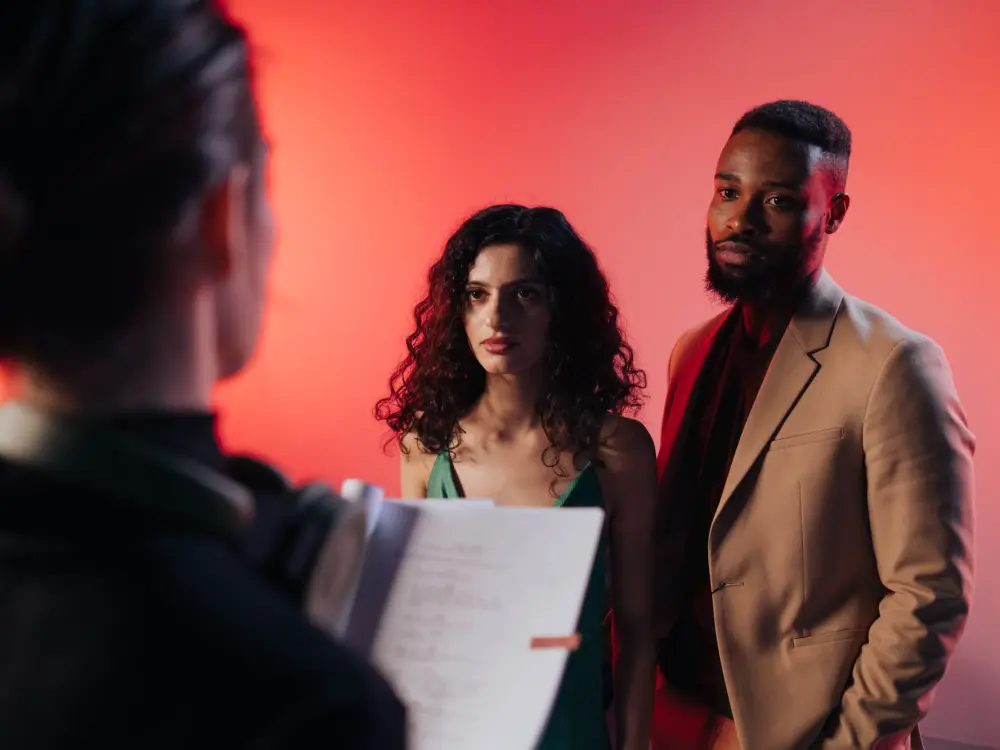
Story & Direction
We start with the argument, not the shot list. Treatments, script passes, casting and a director who stays with the film from first read to final mix.
- Treatment
- Script passes
- Casting
- Recce & boards

Three rooms under one roof: story and direction, production and crew, post and colour.
We start with the argument, not the shot list. Treatments, script passes, casting and a director who stays with the film from first read to final mix.
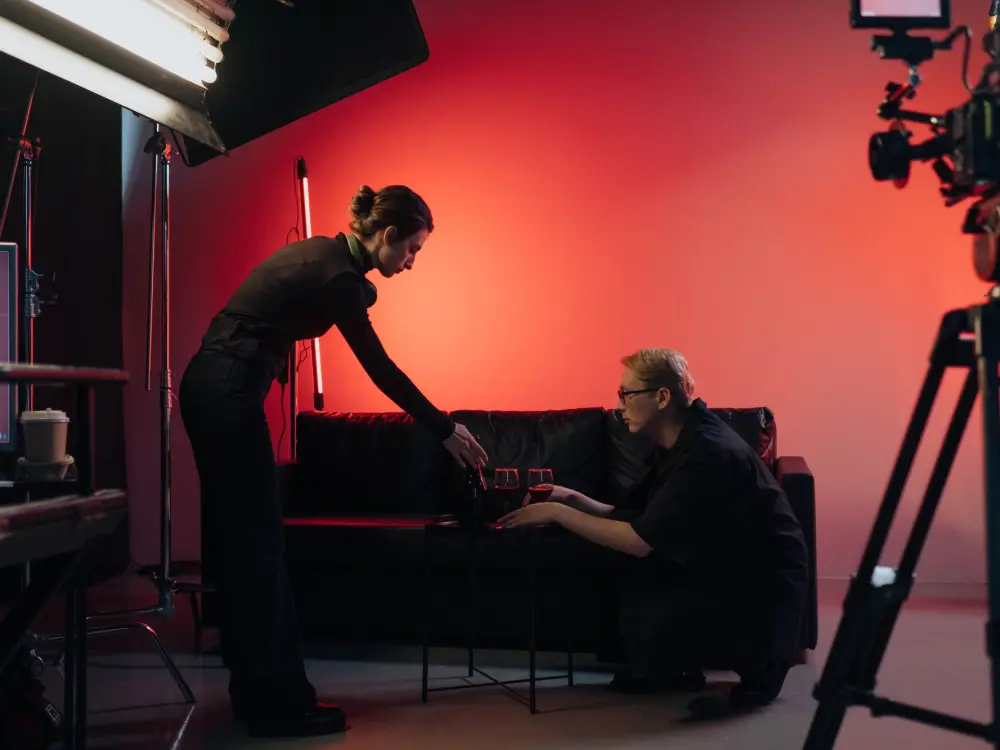
Our own camera and grip package, a crew list we actually know, and the paperwork nobody wants to think about handled before the truck loads.
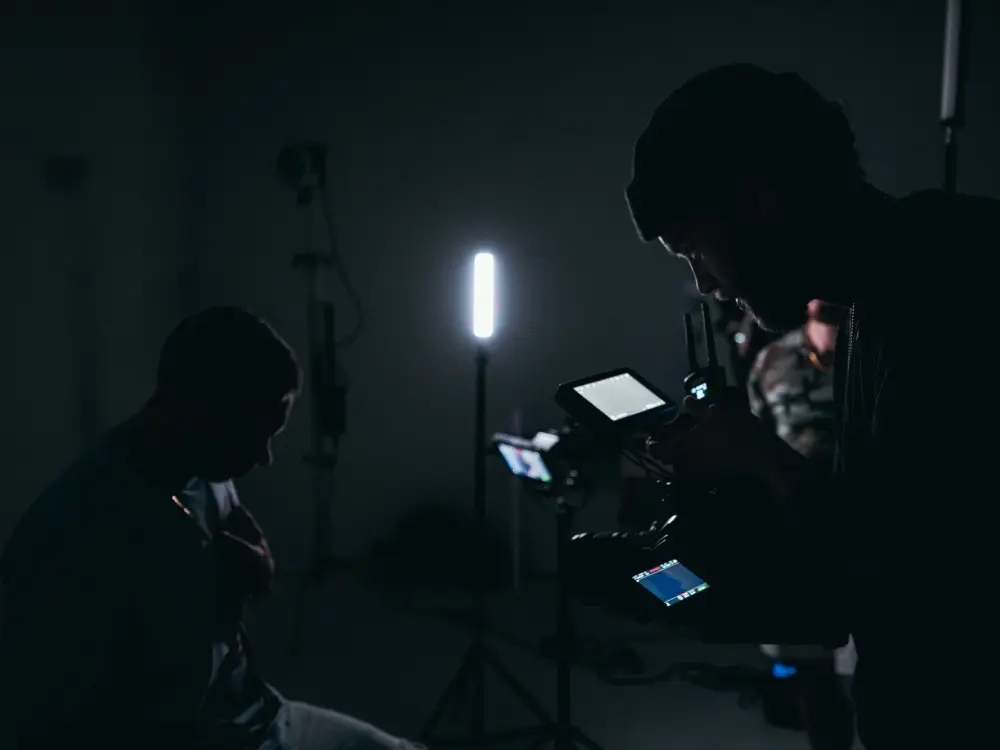
Cut, grade, sound and score in one suite, so the film that leaves us is the film you approved — down to the last frame handle.
You tell us the thing you actually want said. We come back with a treatment, a look, and an honest number — not three tiers designed to push you upward.
Boards, casting, locations, permits, kit list. By the time we lock, every department has seen the same document and signed off on it.
Shoot days run on a call sheet you receive the night before. Dailies land in your inbox by ten the next morning, graded rough so they read properly.
Two rounds of notes are built into the schedule, not sold back to you. You get masters, socials, subtitles and the project archive on a drive.
Every studio hides the number until the third meeting. Here is ours, in advance. Set the shape of your project and you will get the range we would quote, the crew it needs and how long it takes.
Indicative only. Locations, cast, travel and rights move the number, and we will say so before you commit to anything.
They turned up with a shot list, a spare battery for everything, and one very good idea we had not thought of.
Two rounds of notes, both honoured, no invoice attached to either. I have worked with eleven studios and that has happened twice.
The dailies were graded well enough that our board understood the film three weeks before it was finished. That saved the project.
We asked for a ninety-second commercial and they told us where the story actually started. The cut we ran was forty seconds shorter and much better.
If yours is not here, write to us. We answer in a day, and we answer properly rather than booking a call to say the same thing.
A single shoot day with a skeleton crew. We have made films that ran eleven hours and films that ran ninety seconds, and the second kind is often harder. If the idea is good and the schedule is honest, the size does not put us off.
Regularly. Roughly a third of last year's work was shot elsewhere, in eleven countries. We travel with a core team of four and hire the rest locally, which is usually better for the film and always better for the budget.
You do, on commissioned work, including the rushes. We ask only for the right to show the finished film in our reel and to submit it to festivals, and we will hold that back if there is a reason to.
Two, at the offline stage, and they are built into the schedule rather than billed afterwards. Structural changes after picture lock cost money, which is why we spend so long on the treatment.
Yes, and it often makes sense. We will tell you honestly where a swap saves money and where it will cost you a day. Our camera and grip package is available on its own if you only need the kit.
Six to eight weeks is comfortable for most projects, and two weeks is possible if the idea is clear and you are flexible on locations. We are currently taking bookings from the fourth quarter of 2026.