Book a demo flight
BWP Drone Pro

The aircraft

Three airframes, built for one job each, with the specs printed rather than promised.

Airframes in service

What each machine is actually built to do

Imaging asks for endurance and a steady sensor. Application asks for payload and pressure. Build one machine to do both and you get a machine that does neither properly.

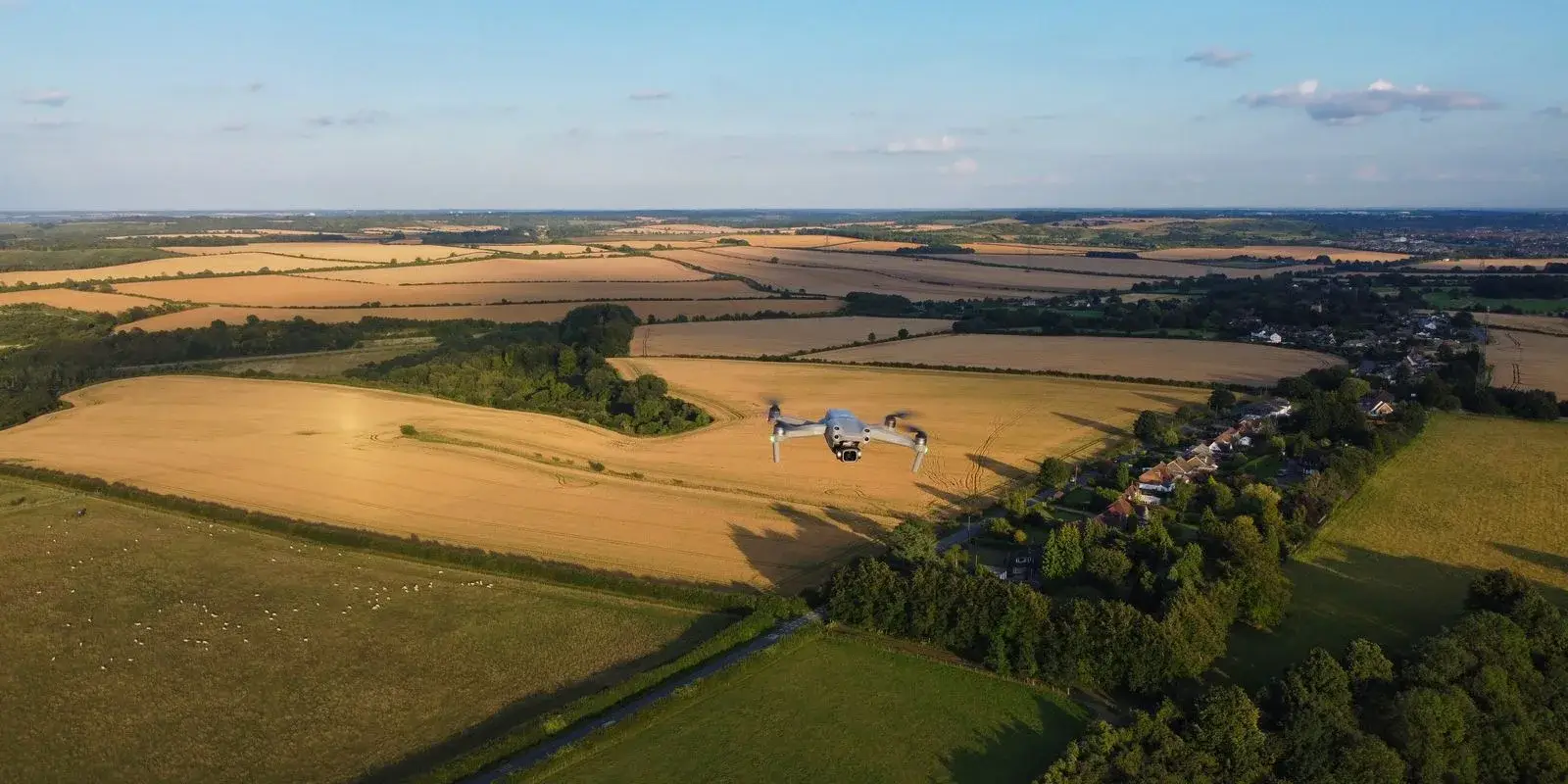
Survey drone hovering above farmland Imaging

TV-8 Scout

Survey & mapping

Behind almost every contract we run. Stays up long enough to finish a quarter section in one go, and holds the sensor steady while it does it.

  • Endurance62 min
  • Coverage340 ac / flight
  • Sensor5-band + RGB
  • Resolution1.2 cm/px
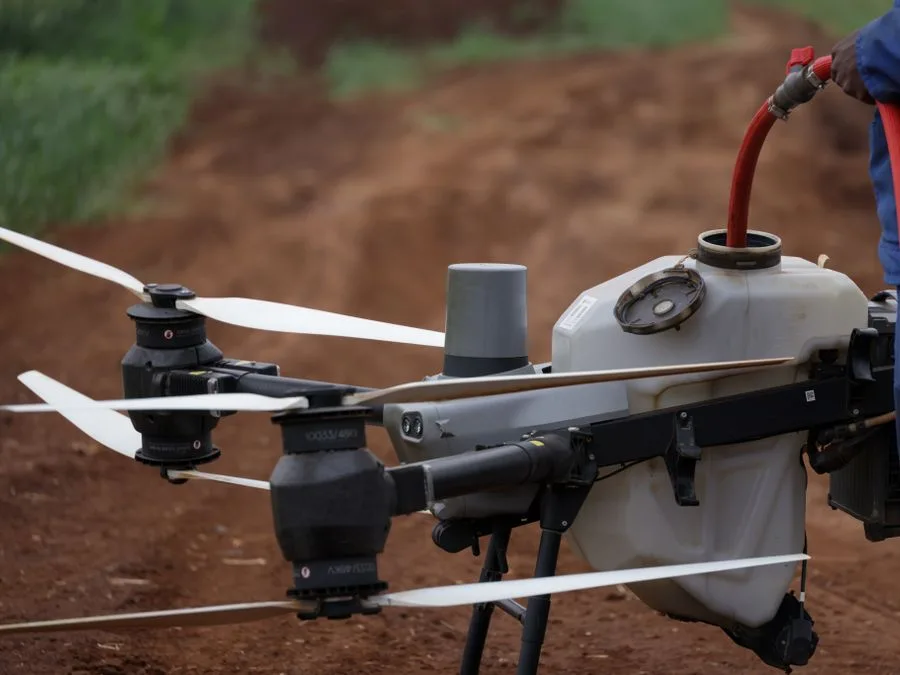
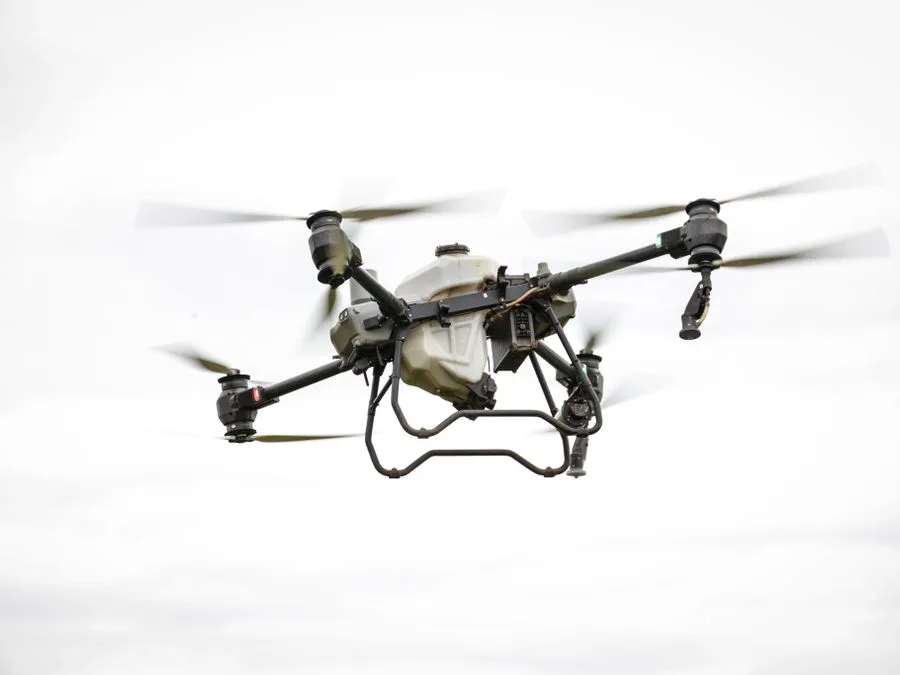
Ground crew filling an agricultural drone tank Liquid

TV-22 Applicator

Spray & foliar feed

Eight nozzles that open and shut on their own. It tracks straight through a crosswind and jumps rate the moment it crosses into a flagged zone.

  • Tank22 L
  • Work rate16 ac / hr
  • Nozzles8, independent
  • PositioningRTK, 2 cm
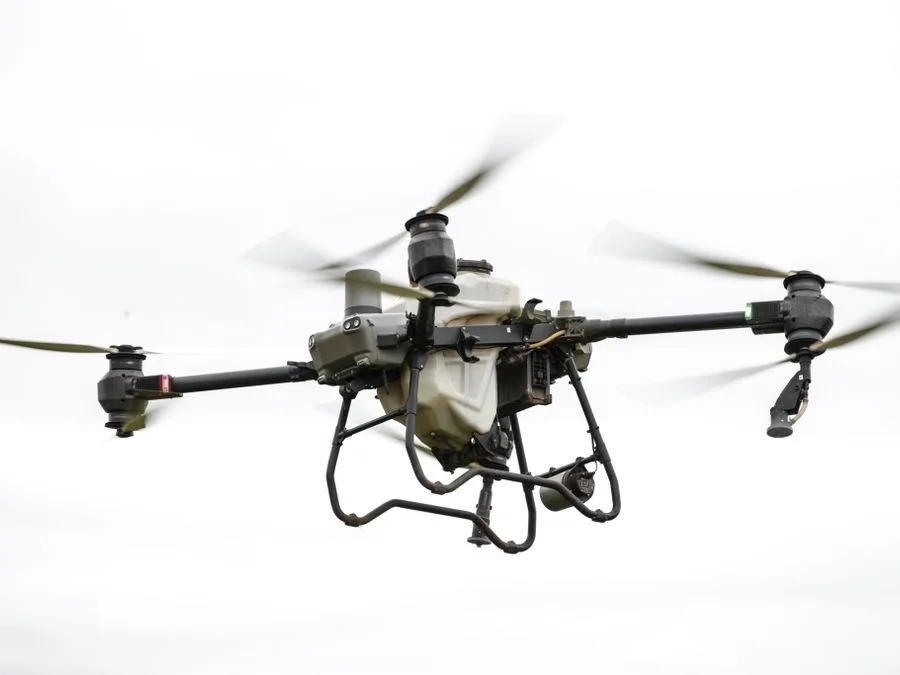
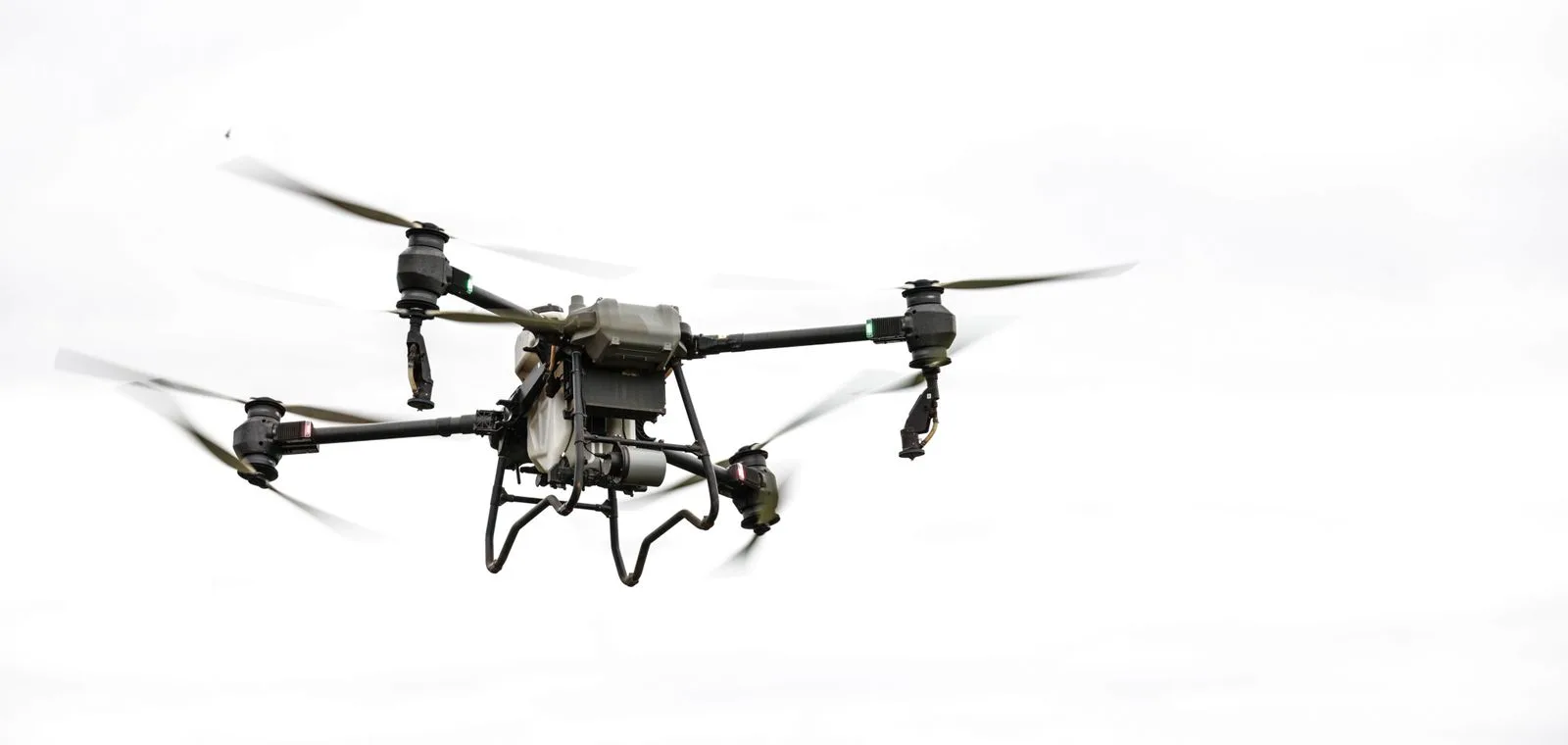
Close-up of a specialised agricultural drone in flight Granular

TV-40 Spreader

Seed & dry product

A wide spinner for cover crop, dry fertiliser and pasture repair. It works soaked ground in October that a spreader would only tear up.

  • Hopper40 kg
  • Swath12 m
  • MaterialsSeed, urea, lime
  • Work rate24 ac / hr
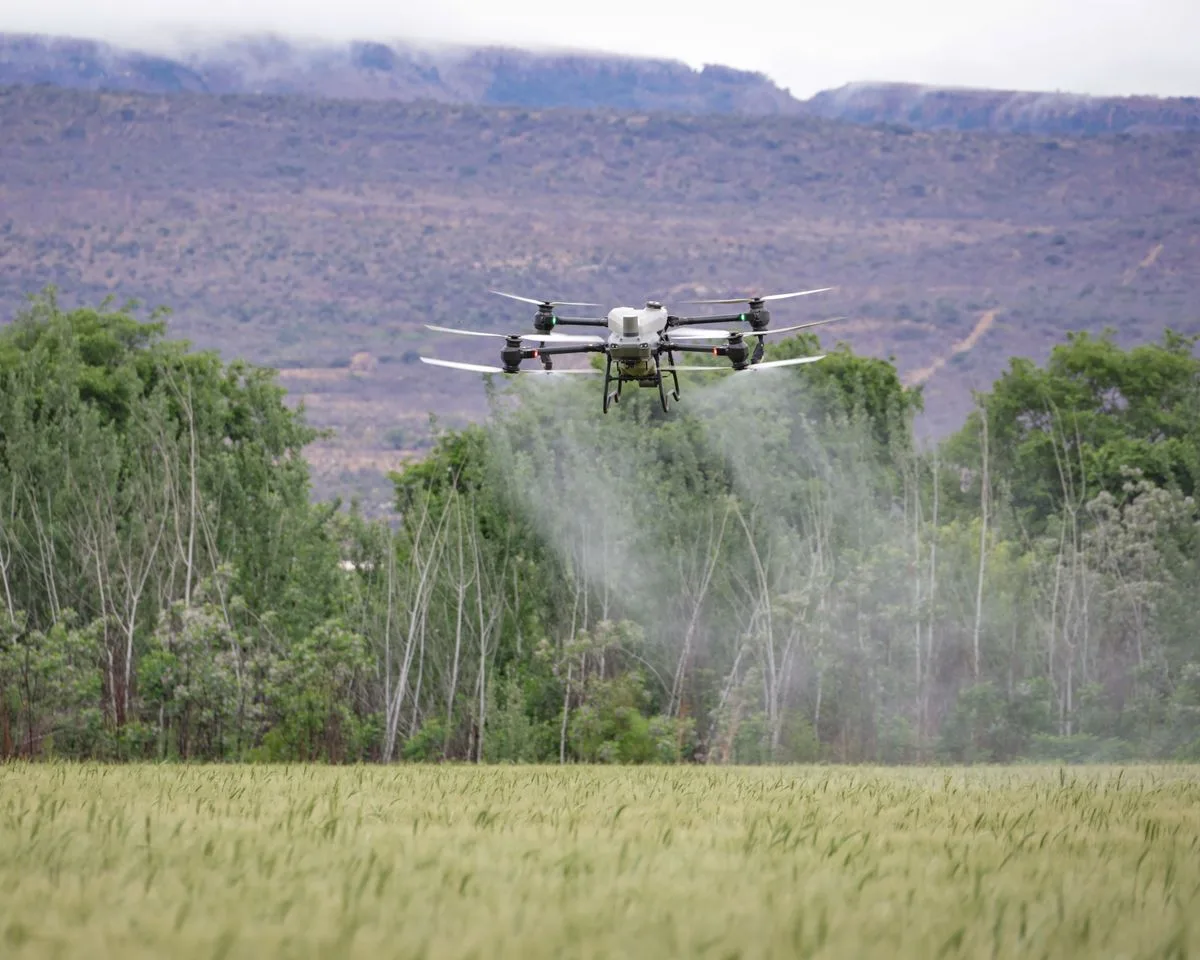
Aerial view of a drone spraying a lush green field
41%
Less product going out per treated acre once the boom answers to a map rather than a timer.
Application, by the map

A blanket pass bills you for acres that were never sick.

Cover a field wall to wall and your worst corner and your cleanest strip get exactly the same treatment. On most ground that means a third of the tank lands on plants that were fine to begin with.

  • Rate answers to the map

    Flow climbs inside a flagged zone and drops to nothing over headlands, drains and buffer strips, without anyone touching a control.

  • Nothing rolls across the soil

    No tracks, no pinch rows, no compaction. In a wet spring that is often the only way a field gets treated on time at all.

  • Spray stays on your side of the fence

    Rotor wash pushes droplets down into the canopy, and each pass records wind speed, heading and nozzle state as it goes.

  • A record worth handing over

    Acre-by-acre proof of product, place and time — ready for your agronomist, your grain buyer or an organic certifier.

Get a spray quote
Where we stand

Numbers you can hold against your own records.

Pulled from flight logs and settled harvest data across six seasons of contracts. If a figure cannot be traced to a grower's books, it is not on this page.

0M
Acres under flight
Booked across grain, tree fruit, rice and grazing ground.
0%
Input volume saved
Typical drop in spray load once passes follow a rate map.
0 days
Head start on trouble
Median gap between our first flag and visible symptoms.
0%
Slots delivered
Missions flown inside the booked window, weather holds aside.
Common ground

The things every grower asks us first.

If your question is not here, ring the dispatch line and ask to speak with an agronomist rather than a salesperson.

+1 (000) 575-898

Not one. The certificates sit with us, the ratings sit with our pilots, and every notice and waiver is filed on our side. You supply gate access and a boundary file, and that is the whole of it.

Wind holding above 15 knots, rain falling, or visibility under three miles. Imaging can still go up in weather that would stop a spray pass, so a hold rarely wipes out the whole day’s schedule.

Processed imagery and the ranked report are in Fieldline within six hours of the aircraft landing. Anything urgent gets a phone call the same afternoon rather than an email that sits unread.

Most of our contracts run exactly that way. They get their own Fieldline login and the authority to approve, rewrite or throw out any rate map before it goes anywhere near an aircraft.

Whichever suits you. Supply it yourself and we bill only for the flying. Ask us to source it and it passes through at cost with the supplier’s invoice attached — there is no margin on product.

We hold full aerial application liability, and every flight writes its own as-applied log. If there is a problem, that log reaches you before you have thought to ask for it.

Give us the field that keeps letting you down.

We will fly it once at our cost, hand over the report in full, and leave the decision with you. Demo slots go out within ten working days right through the season.